Timeout budget checker
/tools/timeout-budget/A call chain's per-try timeouts and retries, top first: the worst case when the bottom hangs, whether it fits the caller's deadline, and which retries can never finish in time.
A call chain's per-try timeouts and retries, top first: the worst case when the bottom hangs, whether it fits the caller's deadline, and which retries can never finish in time.
Every call in a chain has a per-try timeout and some retries, and they are usually set by different people at different times: one in the service’s code, one in a client library, one left at the mesh’s default. Nothing checks that they agree. When they do not, a caller gives up on a try while the service it called is still retrying further down, and those retries are work nobody is waiting for, on a system that is already struggling.
Write the chain one call per line, top first:
frontend -> checkout none 2checkout -> pricing 1s 2pricing -> inventory 500ms 2That is a caller, the service it calls, the per-try timeout (ms, s, or none), and the number of retries. A #
starts a comment. Press Run, and it answers, for the worst case of the bottom service hanging:
The rule it checks is the one in the SRE book’s advice on deadlines: each layer’s tries, with their backoff, should fit inside one try of the layer above, so timeouts shrink going down the chain.
The chain above, with the app at the top giving up after 2 seconds and 25 ms between tries, Istio’s base backoff. Paste it, set Top caller waits to 2000 ms and Backoff between tries to 25 ms, and press Run (or press the sample By hand, all retried).
The answer, in red, because 9.20 s overruns the 2 s you set:
When the bottom hangs: Can take 9.20 s; the caller gives up after 2.00 s
Then the calls whose tries cannot fit:
| Call | Allowed | Needs | Fit | Set per-try to |
|---|---|---|---|---|
frontend -> checkout | 2.00 s | 9.20 s | 0/3 | 650 ms or less |
pricing -> inventory | 1.00 s | 1.55 s | 1/3 | 316 ms or less |
And the other ways out, under Other changes. Fix the top one first, then run again.:
| Call | Change |
|---|---|
frontend -> checkout | Or let the caller wait at least 9.20 s. |
pricing -> inventory | Or do not retry it, or give checkout -> pricing at least 1.55 s per try. |
The chain draws frontend’s call and pricing’s call in red. The detail table under it gives each call’s per try, tries, worst case and fit, and the last part notes that a bottom failing fast instead would see 27 tries if every layer retried the error.
In plain words: when inventory hangs, pricing tries it three times at 500 ms each, which takes 1.55 s, but checkout gives pricing only 1 s per try, so two of pricing’s three tries run for nobody. Checkout’s three tries of pricing take up to 3.05 s, and frontend, with no timeout, tries checkout three times: 9.2 s for a request the app gave up on after 2. The 650 ms and 316 ms are what make each call fit on its own. To make the whole chain fit, shrink the timeouts going down: the sample Shrinking timeouts uses 1.8 s with no retry, 800 ms with one, and 225 ms with two, for a worst case of 1.48 s, which the tool gives as one quiet line with no banner and no table of changes.
retry_on includes gateway-error, 5xx or reset, and Istio’s
default includes none of them: set a perTryTimeout, leave retryOn alone, and the timed-out try is simply not
retried. Measured with Envoy 1.39.3 in mainlog-code’s service-mesh/retry_chain.py: 1 try with Istio’s default,
3 with gateway-error added.index.ts/** * Do a call chain's timeouts and retries fit inside each other? * * Every call in a chain has a per-try timeout and some retries, usually chosen by different people at different * times: one in the service's code, one in a client library, one by the mesh's defaults. Nothing checks that they * agree. The failure they produce is quiet: a caller gives up on a try while the service it called is still * retrying further down, so those retries are work that nobody is waiting for, on a system that is already in * trouble. * * The worst case this checks is the bottom service hanging: it accepts a request and never answers. Then each try * at the bottom runs to its timeout, the call above sees a failure only after all of them, and so on up. It lists * each call whose tries do not fit inside one try of its caller, with the per-try timeout that would make them fit, * then the chain, then how long each call can take and how many of its tries fit above it. * * ⚠️ It assumes every layer retries a try that timed out. Envoy only does that if `retry_on` names gateway-error, * 5xx or reset, and Istio's default names none of them, so with the defaults a timed-out try is not retried at all. * Set a per-try timeout and leave retryOn alone, and you get the timeout without the retry. * * The same arithmetic as `service-mesh/timeout_budget.py` in mainlog-code; the fixtures are its output. */import type { Cell, GraphEdge, GraphNode, Output, Tool } from "@toolbench/sdk";
type Input = { chain: string; deadline: number; backoff: number };
class InputError extends Error { readonly input: string;
constructor(message: string, input: string) { super(message); this.name = "InputError"; this.input = input; }}
type Call = { caller: string; callee: string; timeout: number; retries: number };
function parse(text: string): Call[] { const calls: Call[] = []; for (const raw of text.split("\n")) { const line = raw.split("#")[0]!.trim(); if (!line) continue; const m = /^(.+?)\s+(none|[\d.]+\s*(?:ms|s)?)\s+(\d+)$/.exec(line); if (!m) throw new InputError(`Cannot read "${raw.trim()}": expected "caller -> callee timeout retries".`, "chain"); const [, name, t, r] = m as unknown as [string, string, string, string]; const ends = name.split(/\s*(?:->|→)\s*/); if (ends.length !== 2 || !ends[0] || !ends[1]) throw new InputError(`"${name.trim()}" should be "caller -> callee".`, "chain"); let timeout: number; if (t === "none") timeout = Number.POSITIVE_INFINITY; else if (t.endsWith("ms")) timeout = Number.parseFloat(t) / 1000; else if (t.endsWith("s")) timeout = Number.parseFloat(t); else timeout = Number.parseFloat(t) / 1000; if (!(timeout > 0)) throw new InputError(`The timeout in "${raw.trim()}" must be more than zero, or none.`, "chain"); calls.push({ caller: ends[0].trim(), callee: ends[1].trim(), timeout, retries: Number(r) }); } if (calls.length === 0) throw new InputError("Give at least one call, one per line, top first.", "chain"); if (calls.length > 20) throw new InputError("At most 20 calls.", "chain"); for (let i = 1; i < calls.length; i++) { if (calls[i]!.caller !== calls[i - 1]!.callee) { throw new InputError( `Line ${i + 1} starts at ${calls[i]!.caller}, but line ${i} ends at ${calls[i - 1]!.callee}. Each call should be made by the service the line above called.`, "chain", ); } } return calls;}
function fmt(s: number): string { if (!Number.isFinite(s)) return "unbounded"; return s < 1 ? `${(s * 1000).toFixed(0)} ms` : `${s.toFixed(2)} s`;}
export default { run(input: Input) { try { const calls = parse(String(input.chain ?? "")); const deadline = Number(input.deadline) / 1000; const backoff = Number(input.backoff) / 1000; if (!(deadline > 0)) throw new InputError("The deadline must be more than zero.", "deadline"); if (!(backoff >= 0)) throw new InputError("The backoff cannot be negative.", "backoff");
/* Worst case per call, from the bottom up: each try lasts its timeout or until the call below has failed. */ const worst = new Array<number>(calls.length).fill(0); let below = Number.POSITIVE_INFINITY; for (let i = calls.length - 1; i >= 0; i--) { const c = calls[i]!; const oneTry = Math.min(c.timeout, below); worst[i] = (1 + c.retries) * oneTry + c.retries * backoff; below = worst[i]!; }
/* How many of the callee's tries finish inside one of the caller's. */ const fit: (number | null)[] = calls.map((outer, i) => { const inner = calls[i + 1]; if (!inner) return null; const innerTry = Math.min(inner.timeout, i + 2 < calls.length ? worst[i + 2]! : Number.POSITIVE_INFINITY); if (!Number.isFinite(outer.timeout)) return 1 + inner.retries; if (!Number.isFinite(innerTry)) return 0; return Math.min(1 + inner.retries, Math.floor((outer.timeout + backoff) / (innerTry + backoff) + 1e-9)); });
/* * The top call is checked against the deadline as if the deadline were one try of a call above it: the * app's own timeout is the first layer of the budget, and a top call that can't finish inside it wastes * every try it makes. */ const topTry = Math.min(calls[0]!.timeout, calls.length > 1 ? worst[1]! : Number.POSITIVE_INFINITY); const topFit = Number.isFinite(topTry) ? Math.min(1 + calls[0]!.retries, Math.floor((deadline + backoff) / (topTry + backoff) + 1e-9)) : 0;
let attempts = 1; for (const c of calls) attempts *= 1 + c.retries; const top = worst[0]!; const tries = (i: number) => 1 + calls[i]!.retries; const name = (c: Call) => `${c.caller} -> ${c.callee}`; /* `broken[i]`: call i's tries do not all fit inside one try of the call above it, or the deadline for the top. */ const broken = calls.map((_, i) => (i === 0 ? topFit < tries(0) : (fit[i - 1] ?? tries(i)) < tries(i))); const fitOf = (i: number) => (i === 0 ? topFit : fit[i - 1]!);
/* * The failing boundaries, one row per call whose tries do not all fit inside one try of the call above it, * or inside the deadline for the top call. Each row is the call itself, so the timeout to set and the * numbers that say why are on the same row. The old detail table put "1 of 3" on checkout -> pricing while * its fix named pricing -> inventory, because it showed each call's callee rather than the call. */ const plural = (n: number, one: string, many: string) => `${n} ${n === 1 ? one : many}`; const retriesFix = (f: number) => (f <= 1 ? "do not retry it" : `retry it at most ${plural(f - 1, "time", "times")}`); const failing: Cell[][] = []; const others: Cell[][] = []; /* Calls whose row already says what timeout to set, so a "set a timeout" row would only repeat it. */ const timedFix = new Set<number>(); const order = calls.map((_, i) => i).filter((i) => broken[i]); /* The deadline first, then the rest top down: a fix above changes what fits below. */ for (const i of order) { const c = calls[i]!; const f = fitOf(i); const room = i === 0 ? deadline : calls[i - 1]!.timeout; const maxTry = (room - c.retries * backoff) / tries(i); if (maxTry > 0) timedFix.add(i); const tone = i === 0 || f === 0 ? ("bad" as const) : ("warn" as const); failing.push([ { text: name(c), mono: true }, { text: fmt(room), mono: true }, { text: fmt(worst[i]!), mono: true }, { text: `${f}/${tries(i)}`, mono: true, tone }, { text: maxTry > 0 ? `${fmt(Math.floor(maxTry * 1000) / 1000)} or less` : "no timeout fits", mono: true }, ]); /* The other ways out, which the table's last column does not already say. */ const ways = [ ...(f >= 1 ? [retriesFix(f)] : []), ...(!Number.isFinite(worst[i]!) ? [] : i === 0 ? [`let the caller wait at least ${fmt(worst[0]!)}`] : [`give ${name(calls[i - 1]!)} at least ${fmt(worst[i]!)} per try`]), ]; if (ways.length) { const said = ways.join(", or "); others.push([{ text: name(c), mono: true }, { text: `Or ${said}.` }]); } } calls.forEach((c, i) => { if (Number.isFinite(c.timeout) || timedFix.has(i)) return; others.push([ { text: name(c), mono: true }, { text: `Set a per-try timeout. With none, a hung ${c.callee} holds the call until something above gives up.` }, ]); }); /* Back into chain order, so the rows read top down whichever kind each one is. */ const at = (r: Cell[]) => calls.findIndex((c) => name(c) === (r[0] as { text: string }).text); others.sort((x, y) => at(x) - at(y));
const fitsDeadline = top <= deadline; const parts: Output[] = []; /* * ⚠️ A banner only when the chain cannot finish inside the deadline the reader typed. That is the one result * here a limit the reader supplied decides; anything else leads with the table, or with the quiet answer * when every retry fits. */ if (!fitsDeadline) parts.push({ kind: "fields", role: "verdict", fields: [ { label: "When the bottom hangs", role: "verdict", mono: false, tone: "bad", value: Number.isFinite(top) ? `Can take ${fmt(top)}; the caller gives up after ${fmt(deadline)}` : `Nothing bounds it; the caller gives up after ${fmt(deadline)}`, }, ], }); if (failing.length) parts.push({ kind: "table", role: "comparison", caption: failing.length === 1 ? "1 call cannot finish its tries inside its caller's time" : `${failing.length} calls cannot finish their tries inside their caller's time`, columns: [ { label: "Call", wrap: "none", rowHeader: true }, { label: "Allowed", align: "end", mono: true, wrap: "none" }, { label: "Needs", align: "end", mono: true, wrap: "none" }, { label: "Fit", align: "end", mono: true, wrap: "none" }, { label: "Set per-try to", align: "end", mono: true, wrap: "none" }, ], rows: failing, }); else parts.push({ kind: "fields", role: "answer", fields: [ { label: "Worst case when the bottom hangs", value: fmt(top), note: `Inside the caller's ${fmt(deadline)}, and every call's tries fit inside one try of the call above.`, }, ], }); if (others.length) parts.push({ kind: "table", caption: failing.length ? "Other changes. Fix the top one first, then run again." : "Changes", columns: [ { label: "Call", wrap: "none", rowHeader: true }, { label: "Change", wrap: "prose" }, ], rows: others, }); parts.push(chainGraph(calls, worst, broken, deadline), { kind: "table", caption: "Each call, top first, when the bottom hangs", columns: [ { label: "Call", wrap: "none", rowHeader: true }, { label: "Per try", align: "end", mono: true, wrap: "none" }, { label: "Tries", align: "end", mono: true, wrap: "none" }, { label: "Worst case", align: "end", mono: true, wrap: "none" }, { label: "Fit above", align: "end", mono: true, wrap: "none" }, ], rows: calls.map((c, i) => [ { text: name(c) }, { text: Number.isFinite(c.timeout) ? fmt(c.timeout) : "none", mono: true, ...(Number.isFinite(c.timeout) ? {} : { tone: "warn" as const }), }, { text: String(tries(i)), mono: true }, { text: fmt(worst[i]!), mono: true }, { text: `${fitOf(i)}/${tries(i)}`, mono: true, ...(broken[i] ? { tone: "bad" as const } : {}) }, ]), }); /* * What the check assumes, last and quiet. The product of everyone's tries is a different failure, the bottom * answering fast with an error, so it is here as a caveat rather than beside the answer. */ parts.push({ kind: "fields", role: "method", fields: [ { label: "Assumes", value: "The bottom hangs, and every layer retries a try that timed out.", mono: false }, { label: "Backoff", value: `${fmt(backoff)} between tries` }, { label: "If the bottom fails fast instead", value: `${plural(attempts, "try reaches", "tries reach")} it, when every layer retries the error.`, mono: false, note: "Istio's defaults do not retry an HTTP 503.", }, ], }); return { kind: "group", parts }; } catch (error) { if (error instanceof InputError) return { kind: "error", message: error.message, input: error.input }; throw error; } },} satisfies Tool<Input>;
/** * The chain top to bottom, from whatever calls the top to the service that hangs. Each arrow is one call with its * per-try timeout and tries; each service says how long its own calls can take when the bottom hangs. A call whose * tries do not fit inside the try above it is drawn red and thick, and the first of them, the deadline's if that is * broken, is highlighted. */function chainGraph(calls: Call[], worst: number[], broken: boolean[], deadline: number): Output { const nodes: GraphNode[] = [{ id: "caller", label: "Caller", note: `waits ${fmt(deadline)}`, shape: "pill" }]; const edges: GraphEdge[] = [{ from: "caller", to: "n0", line: "dotted" }]; const services = [calls[0]!.caller, ...calls.map((c) => c.callee)]; services.forEach((s, j) => { const bottom = j === calls.length; nodes.push({ id: `n${j}`, label: s, note: bottom ? "hangs" : Number.isFinite(worst[j]!) ? `its calls take up to ${fmt(worst[j]!)}` : "its calls can wait forever", ...(bottom ? { tone: "warn" as const } : broken[j] ? { tone: "bad" as const } : {}), }); }); calls.forEach((c, i) => { const timed = Number.isFinite(c.timeout); edges.push({ from: `n${i}`, to: `n${i + 1}`, label: `${timed ? `${fmt(c.timeout)} per try` : "no timeout"}, ${1 + c.retries} ${c.retries === 0 ? "try" : "tries"}`, ...(broken[i] ? { tone: "bad" as const, width: "thick" as const } : !timed ? { tone: "warn" as const } : {}), ...(timed ? {} : { line: "dashed" as const }), }); }); const first = broken.indexOf(true); return { kind: "graph", graph: { label: "The chain when the bottom hangs, with each call's per-try timeout and tries", layout: "layered", /* Top to bottom, as the chain is written: a phone has room for a column of five boxes, not a row. */ direction: "TB", nodes, edges, ...(first >= 0 ? { highlight: [`n${first}`, `n${first + 1}`] } : {}), }, };}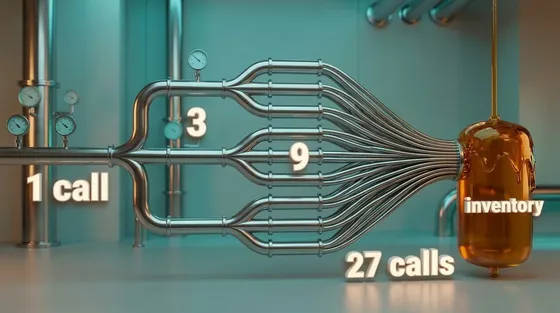
Your shop now runs 14 services in three languages, and security wants every call between them encrypted and identified. A mesh does that without touching the code, for about a fifth of a millisecond per hop and a tenth of a core per proxy per 1,000 requests a second, measured here with real Envoy. It also brings retry and queue defaults nobody chose. Over plain HTTP they retry less than most people expect; over gRPC, or after one common edit, a failing service gets 27 calls for one checkout.
Distributed systems at the point where the theory meets the pager.
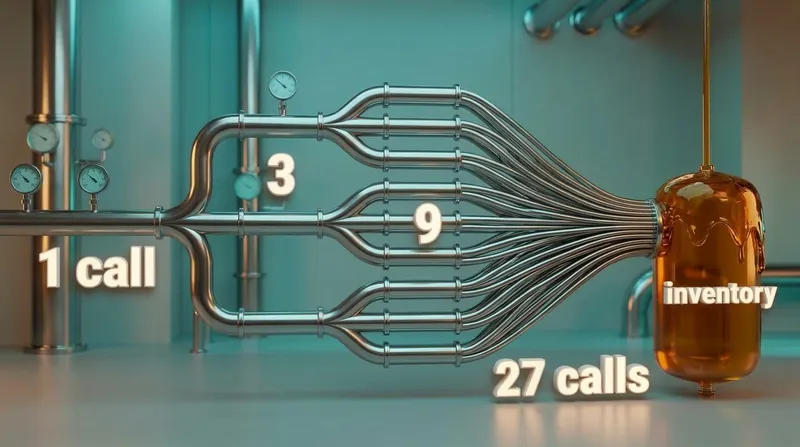
Your shop now runs 14 services in three languages, and security wants every call between them encrypted and identified. A mesh does that without touching the code, for about a fifth of a millisecond per hop and a tenth of a core per proxy per 1,000 requests a second, measured here with real Envoy. It also brings retry and queue defaults nobody chose. Over plain HTTP they retry less than most people expect; over gRPC, or after one common edit, a failing service gets 27 calls for one checkout.

