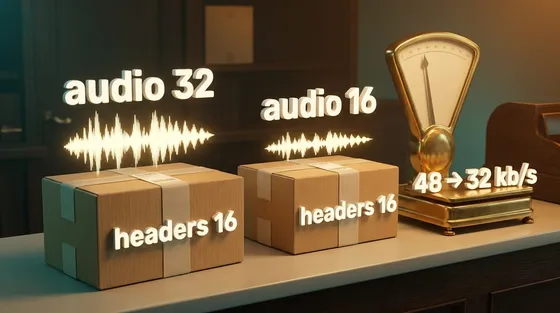
Half the bitrate, two thirds the traffic
Halving an audio bitrate from 32 to 16 kb/s took traffic from 48 to 32, because every packet's headers stay the same size. Packet rate is the other control.
audionetworkingperformance
Distributed systems at the point where the theory meets the pager. I measure what common defaults and mechanisms actually do under load, and what each one costs. Useful if you run services in production and would rather have numbers than rules of thumb.
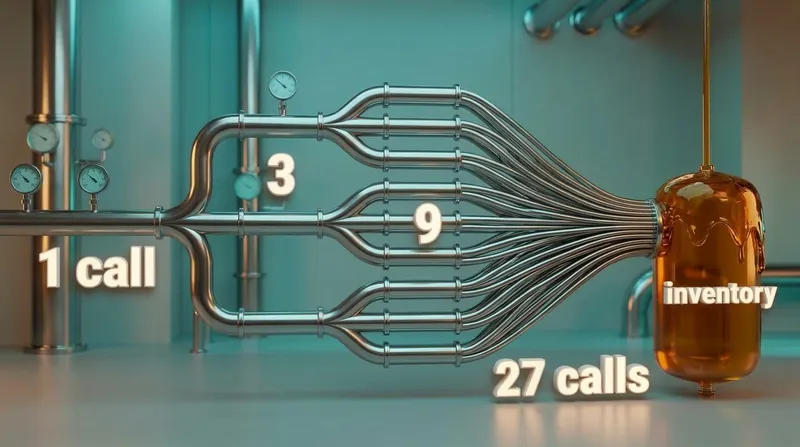
Your shop now runs 14 services in three languages, and security wants every call between them encrypted and identified. A mesh does that without touching the code, for about a fifth of a millisecond per hop and a tenth of a core per proxy per 1,000 requests a second, measured here with real Envoy. It also brings retry and queue defaults nobody chose. Over plain HTTP they retry less than most people expect; over gRPC, or after one common edit, a failing service gets 27 calls for one checkout.
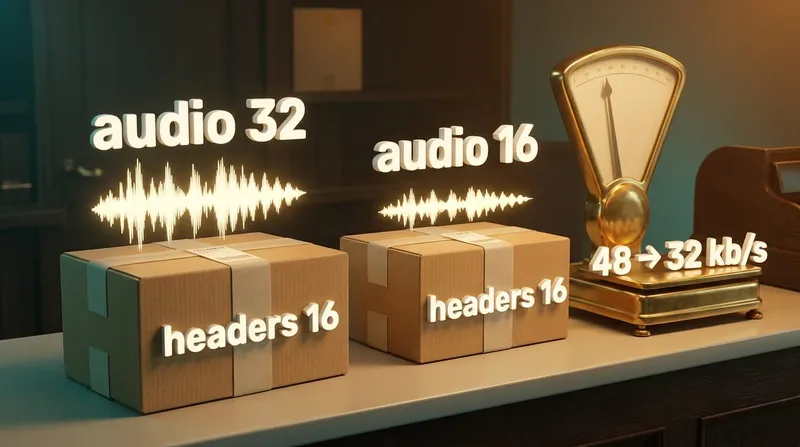
Halving an audio bitrate from 32 to 16 kb/s took traffic from 48 to 32, because every packet's headers stay the same size. Packet rate is the other control.
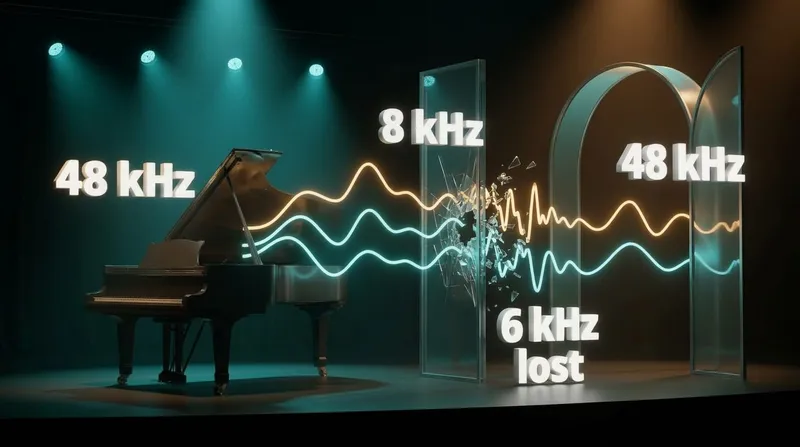
Converting audio to a higher sample rate makes it fit the next program; it cannot bring back sound an earlier step removed. Three test tones show why.

A deploy makes checkout slow for 0.9% of requests, and the dashboard's median doesn't move. Writing down the question you'd ask if it broke, and making a test prove the telemetry can answer it, is what finds them. Plus what that telemetry costs, in series and in microseconds.
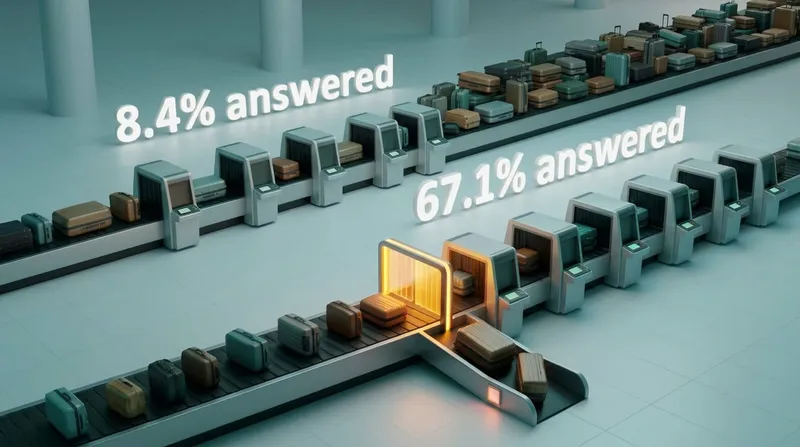
A shop's checkout service can answer 100 requests a second, and for one minute 150 arrive. Left at the usual default, it answers 8% of those people in time; refusing the overflow at once answers two thirds. Capacity decides how many can be served. The policy decides whether they are, and only the question of who is a product decision.
Halving an audio bitrate from 32 to 16 kb/s took traffic from 48 to 32, because every packet's headers stay the same size. Packet rate is the other control.
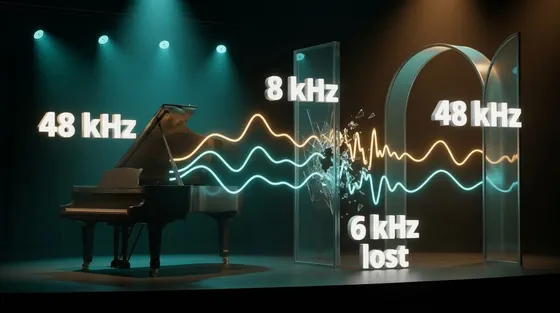
Converting audio to a higher sample rate makes it fit the next program; it cannot bring back sound an earlier step removed. Three test tones show why.

A deploy makes checkout slow for 0.9% of requests, and the dashboard's median doesn't move. Writing down the question you'd ask if it broke, and making a test prove the telemetry can answer it, is what finds them. Plus what that telemetry costs, in series and in microseconds.
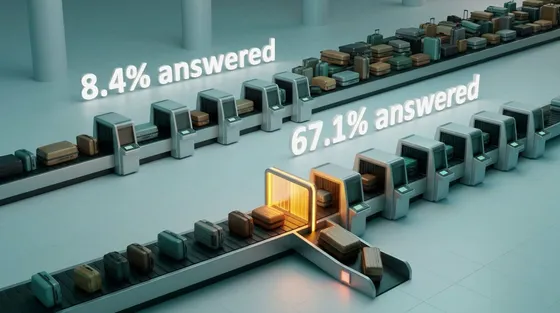
A shop's checkout service can answer 100 requests a second, and for one minute 150 arrive. Left at the usual default, it answers 8% of those people in time; refusing the overflow at once answers two thirds. Capacity decides how many can be served. The policy decides whether they are, and only the question of who is a product decision.