STUN message decoder
/tools/stun-decoder/Paste a STUN message as hex or a Wireshark hex dump: what it is, what to fix, every attribute with addresses un-XORed, and its integrity checked, TURN long-term credentials included.
Paste a STUN message as hex or a Wireshark hex dump: what it is, what to fix, every attribute with addresses un-XORed, and its integrity checked, TURN long-term credentials included.
What is this STUN message, and if a call is failing, is it this message’s fault? Paste the bytes, however you copied them, and it says what the message is, the address or error it carries and whether its integrity holds, lists what to fix, and then shows every attribute with the addresses un-XORed and the integrity checks a receiver would run.
Say two peers never connect. You captured the connectivity check Alice sends to a server, and you want to know why the
server ignores it. You know both sides’ passwords from their SDPs: Alice’s is alice+password+24+chars and the
server’s is server+password+24+chars.
1. Paste the check and Alice’s password. Press the “ICE connectivity check” sample for the bytes, then replace
the password with alice+password+24+chars. Press Run.
Message Binding request 0x0001. An ICE connectivity check from "alce" to "srv7" that nominates this pair.Integrity MESSAGE-INTEGRITY does not match FINGERPRINT matches.
What to fix, most serious firstSeverity What is wrong What to doFails MESSAGE-INTEGRITY: the key tried is the For an ICE check and its answer, use the password itself, a short-term credential ice-pwd from the SDP of the side that as ICE uses. receives the check, not the sender's.In plain words: the bytes arrived intact, since FINGERPRINT passes, but the signature was not made with Alice’s password. That is expected. An ICE check is signed with the password of the side that receives it, so the server can check it with its own.
2. Try the receiver’s password. Put server+password+24+chars in Password and press Run.
Message Binding request 0x0001. An ICE connectivity check from "alce" to "srv7" that nominates this pair.Integrity MESSAGE-INTEGRITY and FINGERPRINT matchNothing is left to fix, so the attribute table comes next.
The check is signed correctly. If the server still ignores it, the problem is not this message: look at the server’s own ice-pwd, or at whether the packet reaches it at all.
3. Read the attribute table for the rest. USERNAME is srv7:alce, the receiver’s ufrag first. PRIORITY decodes
to type preference 110, peer-reflexive, which is what a check carries. USE-CANDIDATE means Alice, the controlling
agent, is nominating this pair.
From Wireshark. Right-click the packet, choose Copy, then “…as a Hex Dump”, and paste. The “Its answer, from
Wireshark” sample is a whole frame copied that way. The offsets and the ASCII column are dropped, and the fields at the
end say Skipped before it: 42 bytes, the Ethernet, IPv4 and UDP headers, before the 32-byte STUN message whose
mapped address is 192.0.2.10:54321.
For TURN. A TURN request carries USERNAME, REALM and NONCE, and is signed with a long-term key: MD5 of
username:realm:password. Enter only the password; the rest comes from the message. A TURN server’s success response
repeats neither USERNAME nor REALM, so for one of those, enter them too. The “Long-term credentials” sample is RFC
5769’s test vector and verifies with TheMatrIX.
0x or \x prefixes, and dumps with offsets
and an ASCII column from Wireshark, tcpdump -X, hexdump -C or xxd. A paste from an RFC figure works too: notes after
a wide gap are ignored. If the bytes start with a captured frame’s headers, the STUN message is found by its magic
cookie and the headers are skipped.username:realm:password when there is one, or
SHA-256 when PASSWORD-ALGORITHM asks for it. The password goes through SASLprep first, as RFC 8489 says. The check
runs in the page; the password goes nowhere.The samples were made by aioice, the ICE implementation under aiortc, and by RFC 5769, rather than typed, so they are what real stacks send. Their addresses are from the documentation ranges and their credentials are made up.
index.ts/** * A STUN message decoder: paste a STUN message, as hex or as a capture's hex dump, and see every field, the * addresses un-XORed, and the checks a receiver would run. * * STUN (RFC 8489) is what ICE's connectivity checks and TURN's control messages are made of, so the same twenty-byte * header turns up in all three. This reads the header, splits the 14-bit type into its method and class, walks the * attributes, and does the things a list of fields cannot: it un-XORs XOR-MAPPED-ADDRESS and its relatives back into * the address they carry, and it checks the integrity attributes. FINGERPRINT is a CRC-32 anyone can verify. * MESSAGE-INTEGRITY and MESSAGE-INTEGRITY-SHA256 are HMACs keyed with a credential, so they are verified when the * reader gives the password: the password itself for ICE and other short-term credentials, MD5 of * "username:realm:password" for TURN's long-term ones. * * It leads with what the message is, the address or error it carries and whether its integrity holds, then what * to fix, because the question behind a paste is usually "why did this fail", not "what is in byte 24". * * References: RFC 8489 (STUN), RFC 8445 (ICE's attributes), RFC 8656 (TURN's), RFC 5769 (the test vectors). */import type { ByteRange, Cell, Field, Output, Tool } from "@toolbench/sdk";
type Input = { message: string; password: string; username: string; realm: string; view: string };
class ParseError extends Error { readonly at: number | undefined; readonly len: number | undefined; constructor(message: string, at?: number, len?: number) { super(message); this.at = at; this.len = len; }}
const MAGIC = 0x2112a442;
// ---------------------------------------------------------------------------// Reading what was pasted// ---------------------------------------------------------------------------
/** Separators people put between hex bytes: spaces, colons, commas, dashes. Not dots: a dump's ASCII column is dots. */const HEX_SEGMENT = /^(?:0x|[0-9a-f]|[\s:,-])+$/i;/** A dump line: an offset of 4 to 8 hex digits, then a colon or at least two spaces, then a byte. */const DUMP_LINE = /^\s*(?:0x)?([0-9a-f]{4,8})(?::\s*|\s{2,})(?=[0-9a-f]{2})/i;
/** The hex digits of a run of text that should be nothing but hex, or an error naming what else is in it. */function hexOf(segment: string): string { const strays = [...new Set(segment.replace(/0x/gi, "").replace(/[0-9a-f\s:,-]/gi, ""))]; if (strays.length > 0) { throw new ParseError( `This is not hex: it contains ${strays.map((c) => `"${c}"`).join(", ")}. Expected hex digits, optionally separated by spaces, colons or commas.`, ); } return segment.replace(/0x/gi, "").replace(/[^0-9a-f]/gi, "");}
/** * Hex, however it was copied: a plain string, bytes separated by spaces, colons or commas, `0x` or `\x` prefixes, or a * dump with offsets down the left and the ASCII column on the right, from Wireshark, tcpdump -X, hexdump -C or xxd. * * ⚠️ A dump's ASCII column can look like hex ("abcd" is printable and hex alike), so it is not left to the parser to * tell apart. Each line is cut at the first gap of two or more spaces that is followed by something that is not hex, * and a dump's bytes per line are capped by the difference between one offset and the next, which is exact whatever * the ASCII column holds. The same gap rule lets a paste from an RFC's figure keep its notes ("Magic cookie") beside * the bytes. */function readHex(text: string): { bytes: Uint8Array; dump: boolean } { const lines = text.replace(/\\x/gi, " ").split(/\r?\n/); const dump = lines.some((l) => DUMP_LINE.test(l)); const rows: { offset?: number; digits: string }[] = []; for (const raw of lines) { let line = raw.replace(/\|[^|]*\|\s*$/, ""); let offset: number | undefined; if (dump) { const m = DUMP_LINE.exec(line); if (!m) { if (line.trim()) rows.push({ digits: hexOf(line) }); continue; } offset = Number.parseInt(m[1]!, 16); line = line.slice(m[0].length); } const segments = line.split(/\s{2,}/); let digits = ""; for (const [i, segment] of segments.entries()) { if (segment === "" || HEX_SEGMENT.test(segment)) { digits += segment.replace(/0x/gi, "").replace(/[^0-9a-f]/gi, ""); continue; } // The first segment is the bytes themselves, so anything odd in it is an error rather than a note. if (i === 0) digits += hexOf(segment); break; } rows.push({ ...(offset !== undefined ? { offset } : {}), digits }); } if (dump) { for (let i = 0; i < rows.length - 1; i++) { const here = rows[i]!.offset; const next = rows[i + 1]!.offset; if (here !== undefined && next !== undefined && next > here) rows[i]!.digits = rows[i]!.digits.slice(0, (next - here) * 2); } } const cleaned = rows.map((r) => r.digits).join(""); if (cleaned.length === 0) throw new ParseError("No hex digits found. Paste a STUN message as hex, or a hex dump from Wireshark."); if (cleaned.length % 2 !== 0) throw new ParseError(`There is an odd number of hex digits (${cleaned.length}), and a byte needs two.`); const bytes = new Uint8Array(cleaned.length / 2); for (let i = 0; i < bytes.length; i++) bytes[i] = Number.parseInt(cleaned.slice(i * 2, i * 2 + 2), 16); return { bytes, dump };}
const u16 = (b: Uint8Array, at: number) => (b[at]! << 8) | b[at + 1]!;const u32 = (b: Uint8Array, at: number) => b[at]! * 0x1000000 + ((b[at + 1]! << 16) | (b[at + 2]! << 8) | b[at + 3]!);const hex = (n: number, width: number) => `0x${n.toString(16).toUpperCase().padStart(width, "0")}`;const hexBytes = (b: Uint8Array) => [...b].map((x) => x.toString(16).padStart(2, "0")).join(" ");const plural = (n: number, one: string, many = `${one}s`) => `${n} ${n === 1 ? one : many}`;
/** A plausible STUN header at `p`: two zero bits, the cookie, a length that is a multiple of 4 and fits. */const headerAt = (b: Uint8Array, p: number) => p + 20 <= b.length && (b[p]! & 0xc0) === 0 && u32(b, p + 4) === MAGIC && u16(b, p + 2) % 4 === 0 && p + 20 + u16(b, p + 2) <= b.length;
/** * Where the STUN message starts. A hex dump of a captured frame begins with the Ethernet, IP and UDP headers, and * asking a reader to count off 42 bytes by hand is exactly the job a tool is for. The cookie at byte 4 of a header is * what makes this safe: a random 32-bit match is a one in four billion chance at each offset. A message whose own * cookie is at byte 4 is never moved, even when its length is wrong, so that error is still reported against it. */function locate(b: Uint8Array): number { if (b.length < 8 || u32(b, 4) === MAGIC) return 0; for (let p = 1; p + 20 <= b.length; p++) if (headerAt(b, p)) return p; return 0;}
/** What the bytes before a located message were, in words, when they parse as the usual headers. */function describePrefix(b: Uint8Array, skip: number): string { const ip = (at: number): number | undefined => { if (at + 40 > b.length) return undefined; const v = b[at]! >> 4; if (v === 4 && b[at + 9] === 17) return at + (b[at]! & 0x0f) * 4; if (v === 6 && b[at + 6] === 17) return at + 40; return undefined; }; const family = (at: number) => (b[at]! >> 4 === 4 ? "IPv4" : "IPv6"); const ether = b.length > 14 && (u16(b, 12) === 0x0800 || u16(b, 12) === 0x86dd) ? ip(14) : undefined; if (ether !== undefined && ether + 8 === skip) return `the Ethernet, ${family(14)} and UDP headers of a captured frame`; const raw = ip(0); if (raw !== undefined && raw + 8 === skip) return `the ${family(0)} and UDP headers of a captured packet`; return "bytes that are not STUN, most likely the headers of a captured packet";}
function need(bytes: Uint8Array, at: number, len: number, what: string): void { if (at + len > bytes.length) { throw new ParseError( `The message is cut short: ${what} needs ${len} byte${len === 1 ? "" : "s"} at offset ${at}, but the message ends at ${bytes.length}.`, at, Math.max(1, bytes.length - at), ); }}
// ---------------------------------------------------------------------------// CRC-32, MD5, SHA-1, SHA-256 and their HMACs, small and synchronous, because a pure tool cannot call SubtleCrypto// ---------------------------------------------------------------------------
const CRC_TABLE = (() => { const t = new Uint32Array(256); for (let n = 0; n < 256; n++) { let c = n; for (let k = 0; k < 8; k++) c = c & 1 ? 0xedb88320 ^ (c >>> 1) : c >>> 1; t[n] = c >>> 0; } return t;})();
export function crc32(b: Uint8Array): number { let c = 0xffffffff; for (const x of b) c = CRC_TABLE[(c ^ x) & 0xff]! ^ (c >>> 8); return (c ^ 0xffffffff) >>> 0;}
const rotl = (x: number, n: number) => ((x << n) | (x >>> (32 - n))) >>> 0;const rotr = (x: number, n: number) => ((x >>> n) | (x << (32 - n))) >>> 0;
/** Merkle-Damgard padding: a 1 bit, zeros, and the length in bits, big-endian for SHA, little-endian for MD5. */function pad(msg: Uint8Array, littleEndian: boolean): DataView { const padded = new Uint8Array(((msg.length + 9 + 63) >> 6) << 6); padded.set(msg); padded[msg.length] = 0x80; const view = new DataView(padded.buffer); const bits = msg.length * 8; const hi = Math.floor(bits / 2 ** 32); if (littleEndian) { view.setUint32(padded.length - 8, bits >>> 0, true); view.setUint32(padded.length - 4, hi, true); } else { view.setUint32(padded.length - 4, bits >>> 0); view.setUint32(padded.length - 8, hi); } return view;}
export function sha1(msg: Uint8Array): Uint8Array { const view = pad(msg, false); let [h0, h1, h2, h3, h4] = [0x67452301, 0xefcdab89, 0x98badcfe, 0x10325476, 0xc3d2e1f0]; const w = new Uint32Array(80); for (let off = 0; off < view.byteLength; off += 64) { for (let i = 0; i < 16; i++) w[i] = view.getUint32(off + i * 4); for (let i = 16; i < 80; i++) w[i] = rotl(w[i - 3]! ^ w[i - 8]! ^ w[i - 14]! ^ w[i - 16]!, 1); let [a, b, c, d, e] = [h0, h1, h2, h3, h4]; for (let i = 0; i < 80; i++) { const [f, k] = i < 20 ? [(b & c) | (~b & d), 0x5a827999] : i < 40 ? [b ^ c ^ d, 0x6ed9eba1] : i < 60 ? [(b & c) | (b & d) | (c & d), 0x8f1bbcdc] : [b ^ c ^ d, 0xca62c1d6]; const t = (rotl(a, 5) + (f >>> 0) + e + k + w[i]!) >>> 0; [e, d, c, b, a] = [d, c, rotl(b, 30), a, t]; } [h0, h1, h2, h3, h4] = [(h0 + a) >>> 0, (h1 + b) >>> 0, (h2 + c) >>> 0, (h3 + d) >>> 0, (h4 + e) >>> 0]; } const out = new Uint8Array(20); const ov = new DataView(out.buffer); [h0, h1, h2, h3, h4].forEach((h, i) => ov.setUint32(i * 4, h)); return out;}
/** The first 32 bits of the fractional parts of the cube roots of the first 64 primes (FIPS 180-4 section 4.2.2). */const K256 = new Uint32Array([ 0x428a2f98, 0x71374491, 0xb5c0fbcf, 0xe9b5dba5, 0x3956c25b, 0x59f111f1, 0x923f82a4, 0xab1c5ed5, 0xd807aa98, 0x12835b01, 0x243185be, 0x550c7dc3, 0x72be5d74, 0x80deb1fe, 0x9bdc06a7, 0xc19bf174, 0xe49b69c1, 0xefbe4786, 0x0fc19dc6, 0x240ca1cc, 0x2de92c6f, 0x4a7484aa, 0x5cb0a9dc, 0x76f988da, 0x983e5152, 0xa831c66d, 0xb00327c8, 0xbf597fc7, 0xc6e00bf3, 0xd5a79147, 0x06ca6351, 0x14292967, 0x27b70a85, 0x2e1b2138, 0x4d2c6dfc, 0x53380d13, 0x650a7354, 0x766a0abb, 0x81c2c92e, 0x92722c85, 0xa2bfe8a1, 0xa81a664b, 0xc24b8b70, 0xc76c51a3, 0xd192e819, 0xd6990624, 0xf40e3585, 0x106aa070, 0x19a4c116, 0x1e376c08, 0x2748774c, 0x34b0bcb5, 0x391c0cb3, 0x4ed8aa4a, 0x5b9cca4f, 0x682e6ff3, 0x748f82ee, 0x78a5636f, 0x84c87814, 0x8cc70208, 0x90befffa, 0xa4506ceb, 0xbef9a3f7, 0xc67178f2,]);
/** SHA-256, for MESSAGE-INTEGRITY-SHA256 and the SHA-256 long-term key of RFC 8489. */export function sha256(msg: Uint8Array): Uint8Array { const view = pad(msg, false); const h = new Uint32Array([0x6a09e667, 0xbb67ae85, 0x3c6ef372, 0xa54ff53a, 0x510e527f, 0x9b05688c, 0x1f83d9ab, 0x5be0cd19]); const w = new Uint32Array(64); for (let off = 0; off < view.byteLength; off += 64) { for (let i = 0; i < 16; i++) w[i] = view.getUint32(off + i * 4); for (let i = 16; i < 64; i++) { const s0 = rotr(w[i - 15]!, 7) ^ rotr(w[i - 15]!, 18) ^ (w[i - 15]! >>> 3); const s1 = rotr(w[i - 2]!, 17) ^ rotr(w[i - 2]!, 19) ^ (w[i - 2]! >>> 10); w[i] = (w[i - 16]! + s0 + w[i - 7]! + s1) >>> 0; } let [a, b, c, d, e, f, g, hh] = [h[0]!, h[1]!, h[2]!, h[3]!, h[4]!, h[5]!, h[6]!, h[7]!]; for (let i = 0; i < 64; i++) { const t1 = (hh + (rotr(e, 6) ^ rotr(e, 11) ^ rotr(e, 25)) + ((e & f) ^ (~e & g)) + K256[i]! + w[i]!) >>> 0; const t2 = ((rotr(a, 2) ^ rotr(a, 13) ^ rotr(a, 22)) + ((a & b) ^ (a & c) ^ (b & c))) >>> 0; [hh, g, f, e, d, c, b, a] = [g, f, e, (d + t1) >>> 0, c, b, a, (t1 + t2) >>> 0]; } [a, b, c, d, e, f, g, hh].forEach((x, i) => { h[i] = (h[i]! + x) >>> 0; }); } const out = new Uint8Array(32); const ov = new DataView(out.buffer); h.forEach((x, i) => ov.setUint32(i * 4, x)); return out;}
const MD5_S = [7, 12, 17, 22, 5, 9, 14, 20, 4, 11, 16, 23, 6, 10, 15, 21];const MD5_K = Array.from({ length: 64 }, (_, i) => Math.floor(Math.abs(Math.sin(i + 1)) * 2 ** 32) >>> 0);
/** MD5, which TURN's long-term credential still uses for its key (RFC 8489 section 9.2.2). */export function md5(msg: Uint8Array): Uint8Array { const view = pad(msg, true); let [a0, b0, c0, d0] = [0x67452301, 0xefcdab89, 0x98badcfe, 0x10325476]; for (let off = 0; off < view.byteLength; off += 64) { let [a, b, c, d] = [a0, b0, c0, d0]; for (let i = 0; i < 64; i++) { const [f, g] = i < 16 ? [(b & c) | (~b & d), i] : i < 32 ? [(d & b) | (~d & c), (5 * i + 1) % 16] : i < 48 ? [b ^ c ^ d, (3 * i + 5) % 16] : [c ^ (b | ~d), (7 * i) % 16]; const sum = (a + (f >>> 0) + MD5_K[i]! + view.getUint32(off + g * 4, true)) >>> 0; [a, d, c] = [d, c, b]; b = (b + rotl(sum, MD5_S[(i >> 4) * 4 + (i % 4)]!)) >>> 0; } [a0, b0, c0, d0] = [(a0 + a) >>> 0, (b0 + b) >>> 0, (c0 + c) >>> 0, (d0 + d) >>> 0]; } const out = new Uint8Array(16); const ov = new DataView(out.buffer); [a0, b0, c0, d0].forEach((x, i) => ov.setUint32(i * 4, x, true)); return out;}
function hmac(hash: (m: Uint8Array) => Uint8Array, size: number, key: Uint8Array, msg: Uint8Array): Uint8Array { const k = key.length > 64 ? hash(key) : key; const block = new Uint8Array(64); block.set(k); const inner = new Uint8Array(64 + msg.length); const outer = new Uint8Array(64 + size); for (let i = 0; i < 64; i++) { inner[i] = block[i]! ^ 0x36; outer[i] = block[i]! ^ 0x5c; } inner.set(msg, 64); outer.set(hash(inner), 64); return hash(outer);}
export const hmacSha1 = (key: Uint8Array, msg: Uint8Array) => hmac(sha1, 20, key, msg);export const hmacSha256 = (key: Uint8Array, msg: Uint8Array) => hmac(sha256, 32, key, msg);
/** * SASLprep (RFC 4013), which a long-term password goes through, to the extent that changes a real password: * characters "commonly mapped to nothing" are removed, other spaces become a plain space, and the result is * NFKC-normalised. RFC 5769's long-term vector is exactly this case: "The<U+00AD>M<U+00AA>tr<U+2168>" becomes * "TheMatrIX". The prohibited-character and bidi checks are left out: they reject a password, and a tool checking a * message someone else signed is better off trying it. */export function saslprep(password: string): string { return password .replace(/[\u00AD\u034F\u1806\u180B-\u180D\u200B-\u200D\u2060\uFE00-\uFE0F\uFEFF]/g, "") .replace(/[\u00A0\u1680\u2000-\u200A\u202F\u205F\u3000]/g, " ") .normalize("NFKC");}
/** A copy of the message up to `end`, with its length field set as if the message ended just after `end + extra`. */function withLength(bytes: Uint8Array, end: number, extra: number): Uint8Array { const out = bytes.slice(0, end); const len = end - 20 + extra; out[2] = (len >> 8) & 0xff; out[3] = len & 0xff; return out;}
// ---------------------------------------------------------------------------// Types and attributes// ---------------------------------------------------------------------------
const METHODS: Record<number, string> = { 0x001: "Binding", 0x003: "Allocate", 0x004: "Refresh", 0x006: "Send", 0x007: "Data", 0x008: "CreatePermission", 0x009: "ChannelBind",};const CLASSES = ["request", "indication", "success response", "error response"];
const ATTRIBUTES: Record<number, string> = { 0x0001: "MAPPED-ADDRESS", 0x0006: "USERNAME", 0x0008: "MESSAGE-INTEGRITY", 0x0009: "ERROR-CODE", 0x000a: "UNKNOWN-ATTRIBUTES", 0x000c: "CHANNEL-NUMBER", 0x000d: "LIFETIME", 0x0012: "XOR-PEER-ADDRESS", 0x0013: "DATA", 0x0014: "REALM", 0x0015: "NONCE", 0x0016: "XOR-RELAYED-ADDRESS", 0x0019: "REQUESTED-TRANSPORT", 0x001c: "MESSAGE-INTEGRITY-SHA256", 0x001d: "PASSWORD-ALGORITHM", 0x001e: "USERHASH", 0x0020: "XOR-MAPPED-ADDRESS", 0x0024: "PRIORITY", 0x0025: "USE-CANDIDATE", 0x8022: "SOFTWARE", 0x8023: "ALTERNATE-SERVER", 0x8028: "FINGERPRINT", 0x8029: "ICE-CONTROLLED", 0x802a: "ICE-CONTROLLING",};
const TYPE_PREFS: Record<number, string> = { 126: "host", 110: "peer-reflexive", 100: "server-reflexive", 0: "relayed" };
/** * What to do about an error response, by code: RFC 8489 section 14.8 and RFC 8656 section 19. Only the codes whose * remedy is specific; any other gets a pointer to the RFCs. */const ERROR_ACTIONS: Record<number, string> = { 300: "Try the server named in ALTERNATE-SERVER instead.", 400: "The server could not parse the request. Decode the request you sent with this tool and look for what it marks.", 401: "Send the request again with USERNAME, and the REALM and NONCE from this response, signed with MESSAGE-INTEGRITY keyed with MD5 of username:realm:password.", 403: "The server refuses this request with these credentials. Check that the account may use TURN, and that the peer address is allowed.", 420: "The server does not understand the attributes listed in UNKNOWN-ATTRIBUTES. Send the request again without them.", 437: "The server has no allocation for this client address and port, or a different one. Start again with a new Allocate.", 438: "The nonce has expired. Send the request again with the NONCE from this response.", 441: "The credentials do not match the allocation. Use the same username as the Allocate that created it.", 442: "The server does not relay this transport. Ask for UDP (17) in REQUESTED-TRANSPORT.", 486: "This user has as many allocations as the server allows. Free one with a Refresh of lifetime 0, or wait for one to expire.", 487: "Both ICE agents claim the same role. Switch roles as RFC 8445 section 7.2.5.1 says, and send the check again.", 500: "The server failed. Retry after a short wait.", 508: "The server has no relay capacity left. Try another TURN server.",};
type Tone = "good" | "warn" | "bad";
interface Attr { at: number; type: number; len: number; name: string; value: string; note?: string; tone?: Tone;}
/** One integrity check: what it is, whether it passed, and, when it could not be run, why. */interface Check { name: string; at: number; result: "pass" | "fail" | "unchecked"; detail: string;}
function address(bytes: Uint8Array, at: number, len: number, xor: boolean, txid: Uint8Array): { value: string; note: string; tone?: Tone } { const family = bytes[at + 1]; const rawPort = u16(bytes, at + 2); const port = xor ? rawPort ^ (MAGIC >>> 16) : rawPort; if (family === 0x01 && len >= 8) { const raw = u32(bytes, at + 4); const ip = xor ? (raw ^ MAGIC) >>> 0 : raw; const text = [24, 16, 8, 0].map((s) => (ip >>> s) & 0xff).join("."); return { value: `${text}:${port}`, note: xor ? `IPv4. The port is ${hex(rawPort, 4)} XOR 0x2112 and the address ${hex(raw, 8)} XOR 0x2112A442.` : "IPv4, sent in the clear.", }; } if (family === 0x02 && len >= 20) { const mask = new Uint8Array(16); new DataView(mask.buffer).setUint32(0, MAGIC); mask.set(txid, 4); const words: string[] = []; for (let i = 0; i < 16; i += 2) words.push((((bytes[at + 4 + i]! ^ (xor ? mask[i]! : 0)) << 8) | (bytes[at + 5 + i]! ^ (xor ? mask[i + 1]! : 0))).toString(16)); return { value: `[${words.join(":")}]:${port}`, note: xor ? "IPv6. It is XORed with the cookie followed by the transaction ID." : "IPv6, sent in the clear." }; } return { value: `family ${family}`, note: "This is not an address family STUN defines.", tone: "warn" };}
interface Credentials { password: string; username: string; realm: string;}
function decode(bytes: Uint8Array, creds: Credentials) { need(bytes, 0, 20, "the STUN header"); const type = u16(bytes, 0); if (type & 0xc000) throw new ParseError(`The first two bits are ${type >> 14}, but a STUN message's are always 00. This is probably not a STUN message.`, 0, 1); const length = u16(bytes, 2); const cookie = u32(bytes, 4); if (cookie !== MAGIC) { throw new ParseError( `The magic cookie is ${hex(cookie, 8)}, but STUN's is always 0x2112A442. This is probably not a STUN message, or it is the older RFC 3489 kind.`, 4, 4, ); } if (length % 4 !== 0) throw new ParseError(`The length is ${length}, but STUN attributes are padded to 4 bytes, so it is always a multiple of 4.`, 2, 2); if (20 + length > bytes.length) throw new ParseError(`The header says ${length} bytes of attributes follow, but only ${bytes.length - 20} do.`, 2, 2); const method = (type & 0x000f) | ((type & 0x00e0) >> 1) | ((type & 0x3e00) >> 2); const klass = ((type & 0x0010) >> 4) | ((type & 0x0100) >> 7); const txid = bytes.slice(8, 20);
const attrs: Attr[] = []; const checks: Check[] = []; const text = (v: number, len: number) => new TextDecoder().decode(bytes.slice(v, v + len)); const attrText = (t: number): string | undefined => { const a = attrs.find((x) => x.type === t); return a ? text(a.at + 4, a.len) : undefined; }; let errorCode: number | undefined;
/* * The key for both integrity attributes. Long-term when there is a realm to use, from the message or from the * reader: a TURN server's success response does not repeat USERNAME or REALM, so the reader has to give them. * Short-term otherwise, which is every ICE check. The message's own values win over the reader's. */ const key = (): { key: Uint8Array; how: string } | { missing: string } => { const realm = attrText(0x0014) ?? creds.realm; const prepped = saslprep(creds.password); const changed = prepped !== creds.password ? `, after SASLprep turned the password into "${prepped}"` : ""; if (!realm) return { key: new TextEncoder().encode(prepped), how: `the password itself, a short-term credential as ICE uses${changed}` }; const username = attrText(0x0006) ?? creds.username; if (!username) return { missing: "This is a long-term credential and the message has no USERNAME. Enter the username to check it." }; const sha = attrs.some((x) => x.type === 0x001d && x.len >= 2 && u16(bytes, x.at + 4) === 0x0002); const input = new TextEncoder().encode(`${username}:${realm}:${prepped}`); return sha ? { key: sha256(input), how: `SHA-256 of "${username}:${realm}:password", a long-term credential, as PASSWORD-ALGORITHM asks${changed}` } : { key: md5(input), how: `MD5 of "${username}:${realm}:password", a long-term credential as TURN uses${changed}` }; };
let at = 20; while (at < 20 + length) { need(bytes, at, 4, "an attribute header"); const aType = u16(bytes, at); const aLen = u16(bytes, at + 2); need(bytes, at + 4, aLen, `attribute ${hex(aType, 4)}`); const v = at + 4; const name = ATTRIBUTES[aType] ?? (aType < 0x8000 ? "unknown, must be understood" : "unknown, may be ignored"); let value = `${aLen} bytes`; let note: string | undefined; let tone: Tone | undefined; switch (aType) { case 0x0001: case 0x0020: case 0x0012: case 0x0016: case 0x8023: { const a = address(bytes, v, aLen, aType !== 0x0001 && aType !== 0x8023, txid); value = a.value; note = a.note; tone = a.tone; break; } case 0x0006: { value = text(v, aLen); const parts = value.split(":"); // RFC 8445 section 7.2.2: the receiver's ufrag, a colon, the sender's. note = parts.length === 2 ? `For ICE, "${parts[0]}" is the receiver's ufrag and "${parts[1]}" the sender's.` : "Who is asking."; break; } case 0x0014: value = text(v, aLen); note = "The server's name for the set of accounts the password belongs to."; break; case 0x0015: value = text(v, aLen); note = "A value the server chose, to be sent back with the next request."; break; case 0x8022: value = text(v, aLen); note = "The software that sent this message."; break; case 0x0009: { errorCode = (bytes[v + 2]! & 0x07) * 100 + bytes[v + 3]!; value = `${errorCode} ${text(v + 4, aLen - 4)}`; note = `Class ${bytes[v + 2]! & 0x07} and number ${bytes[v + 3]}, then the reason phrase.`; break; } case 0x000d: value = `${u32(bytes, v)} s`; note = "How long the allocation lasts unless it is refreshed."; break; case 0x0019: value = bytes[v] === 17 ? "UDP (17)" : `protocol ${bytes[v]}`; note = "The transport the client wants the relay to use towards peers."; break; case 0x000c: value = hex(u16(bytes, v), 4); break; case 0x001d: value = u16(bytes, v) === 2 ? "SHA-256 (2)" : u16(bytes, v) === 1 ? "MD5 (1)" : `algorithm ${u16(bytes, v)}`; note = "The hash used to make the long-term key."; break; case 0x0024: { const p = u32(bytes, v); const tp = Math.floor(p / 2 ** 24); value = String(p); note = `Type preference ${tp}${TYPE_PREFS[tp] ? `, which is ${TYPE_PREFS[tp]} in RFC 8445's recommended values` : ""}. Local preference ${(p >>> 8) & 0xffff}, component ${256 - (p & 0xff)}.`; break; } case 0x0025: value = "present"; note = "The controlling agent nominates this pair for the call."; break; case 0x8029: case 0x802a: value = hexBytes(bytes.slice(v, v + aLen)); note = `The sender says it is the ${aType === 0x802a ? "controlling" : "controlled"} agent. The number breaks a tie if both sides claim the same role.`; break; case 0x0008: case 0x001c: { value = hexBytes(bytes.slice(v, v + aLen)); const sha = aType === 0x001c; if (!creds.password) { note = `An ${sha ? "HMAC-SHA256" : "HMAC-SHA1"} of the message, keyed with a credential. Enter the password to check it.`; checks.push({ name, at, result: "unchecked", detail: "no password given" }); break; } const k = key(); if ("missing" in k) { note = k.missing; checks.push({ name, at, result: "unchecked", detail: "no username for the long-term key" }); break; } const signed = withLength(bytes, at, aLen + 4); const expect = sha ? hmacSha256(k.key, signed) : hmacSha1(k.key, signed); // MESSAGE-INTEGRITY-SHA256 may be truncated to as few as 16 bytes (RFC 8489 section 14.6). const ok = aLen > 0 && aLen <= expect.length && expect.slice(0, aLen).every((x, i) => x === bytes[v + i]); note = ok ? `It matches. The key is ${k.how}.` : `It does not match. The key tried is ${k.how}.`; if (!ok) tone = "bad"; checks.push({ name, at, result: ok ? "pass" : "fail", detail: k.how }); break; } case 0x8028: { const got = u32(bytes, v); const want = (crc32(withLength(bytes, at, 8)) ^ 0x5354554e) >>> 0; value = hex(got, 8); const ok = got === want; note = ok ? "It matches: the CRC-32 of everything before it, XOR 0x5354554E." : `It does not match. The bytes before it give ${hex(want, 8)}.`; if (!ok) tone = "bad"; checks.push({ name, at, result: ok ? "pass" : "fail", detail: "" }); break; } } attrs.push({ at, type: aType, len: aLen, name, value, ...(note ? { note } : {}), ...(tone ? { tone } : {}) }); at = v + aLen + ((4 - (aLen % 4)) % 4); } return { type, method, klass, length, txid, attrs, checks, errorCode };}
type Decoded = ReturnType<typeof decode>;type Finding = { level: "bad" | "warn" | "normal"; problem: string; fix: string };
const LEVEL = { bad: "Fails", warn: "Warning", normal: "Unchecked" } as const;
/** * What the message is, in its own fields, and what is wrong with it, worst first. * * No tone on the identity: a success response is a message class, not a pass. Only a failed integrity check is * coloured, because that is the one thing a receiver acts on by dropping the message. */function assess(m: Decoded, methodName: string): { answer: Field[]; findings: Finding[] } { const findings: Finding[] = []; const has = (t: number) => m.attrs.some((a) => a.type === t); const value = (t: number) => m.attrs.find((a) => a.type === t)?.value; const failed = m.checks.filter((c) => c.result === "fail"); const passed = m.checks.filter((c) => c.result === "pass"); const unchecked = m.checks.filter((c) => c.result === "unchecked"); const iceCheck = m.method === 0x001 && m.klass === 0 && has(0x0024);
for (const c of failed) { findings.push( c.name === "FINGERPRINT" ? { level: "bad", problem: "FINGERPRINT: the bytes changed after the sender wrote it, so a receiver drops the message.", fix: "Copy the packet again. A dump cut short, or bytes from two packets, both do this.", } : { level: "bad", problem: `${c.name}: the key tried is ${c.detail}.`, fix: has(0x0014) ? "Check the TURN password, and the username and realm. All three go into the key." : "For an ICE check and its answer, use the ice-pwd from the SDP of the side that receives the check, not the sender's.", }, ); } if (m.errorCode !== undefined) { findings.push({ level: "warn", problem: `The server answered ${value(0x0009)}.`, fix: ERROR_ACTIONS[m.errorCode] ?? "Look this code up in RFC 8489 section 14.8, or RFC 8656 section 19 for TURN.", }); } if (iceCheck && !has(0x8028)) { findings.push({ level: "warn", problem: "This ICE check has no FINGERPRINT.", fix: "RFC 8445 section 7.2.4 requires FINGERPRINT on every connectivity check. Add it last." }); } if (iceCheck && !has(0x0008) && !has(0x001c)) { findings.push({ level: "warn", problem: "This ICE check has no MESSAGE-INTEGRITY, so the receiver cannot tell it belongs to the call.", fix: "Sign it with the receiver's ice-pwd, and send USERNAME as the receiver's ufrag, a colon, then the sender's.", }); } for (const c of unchecked) { findings.push({ level: "normal", problem: `${c.name}: ${c.detail}.`, fix: c.detail === "no password given" ? "Enter the password: for ICE, the ice-pwd of the side receiving the check; for TURN, the account's password." : "Enter the username the client used, and the realm, both from the request this answers.", }); } const order = { bad: 0, warn: 1, normal: 2 }; findings.sort((a, b) => order[a.level] - order[b.level]);
const answer: Field[] = []; const user = value(0x0006)?.split(":"); const what = iceCheck ? `An ICE connectivity check${user?.length === 2 ? ` from "${user[1]}" to "${user[0]}"` : ""}${has(0x0025) ? " that nominates this pair" : ""}.` : m.method === 0x001 && m.klass === 0 && m.attrs.length === 0 ? "It asks the server which address it sees, and carries nothing else." : undefined; answer.push({ label: "Message", value: `${methodName} ${CLASSES[m.klass]}`, note: `${hex(m.type, 4)}${what ? `. ${what}` : ""}` });
if (m.errorCode !== undefined) { answer.push({ label: "Error", value: value(0x0009) ?? String(m.errorCode) }); } else if (has(0x0016)) { answer.push({ label: "Relayed address", value: value(0x0016)!, ...(has(0x000d) ? { note: `for ${value(0x000d)}` } : {}) }); } else if (has(0x0020) || has(0x0001)) { answer.push({ label: "Mapped address", value: (value(0x0020) ?? value(0x0001))!, note: "Where the server saw the sender." }); } else if (has(0x0006) && !iceCheck) { answer.push({ label: "Username", value: value(0x0006)!, ...(has(0x0014) ? { note: `realm ${value(0x0014)}` } : {}) }); }
const names = (cs: typeof m.checks) => cs.map((c) => c.name).join(" and "); let integrity: Field; if (failed.length) { integrity = { label: "Integrity", value: `${names(failed)} ${failed.length === 1 ? "does" : "do"} not match`, tone: "bad" }; if (passed.length) integrity.note = `${names(passed)} ${passed.length === 1 ? "matches" : "match"}.`; } else if (passed.length) { integrity = { label: "Integrity", value: `${names(passed)} ${passed.length === 1 ? "matches" : "match"}` }; if (unchecked.length) integrity.note = `${names(unchecked)} not checked.`; } else if (unchecked.length) { integrity = { label: "Integrity", value: `${names(unchecked)} not checked` }; } else { integrity = { label: "Integrity", value: "none present", note: "No FINGERPRINT or MESSAGE-INTEGRITY." }; } answer.push(integrity); return { answer, findings };}
export default { run({ message, password, username, realm, view }: Input): Output { try { const read = readHex(message); const all = read.bytes; const skip = locate(all); const head = all.subarray(skip); const declared = head.length >= 4 ? 20 + u16(head, 2) : 0; // Only a message that parses is trimmed to its length: a short one must still fail on its length. const bytes = head.length >= 20 && u32(head, 4) === MAGIC && head.length > declared ? head.slice(0, declared) : head.slice(); const m = decode(bytes, { password: password.trim(), username: username.trim(), realm: realm.trim() }); const after = head.length - bytes.length; const methodName = METHODS[m.method] ?? `Method ${hex(m.method, 3)}`; const { answer, findings } = assess(m, methodName);
const method: Field[] = [ { label: "Message type", value: hex(m.type, 4), note: `Method ${hex(m.method, 3)}, ${methodName}, and class ${m.klass}, ${CLASSES[m.klass]}, with their bits interleaved.`, group: "Header", }, { label: "Length", value: `${m.length} bytes`, note: "Of attributes, after the 20-byte header.", group: "Header" }, { label: "Magic cookie", value: "0x2112A442", note: "Always the same. It tells STUN apart from the media sharing the port.", group: "Header" }, { label: "Transaction ID", value: hexBytes(m.txid), note: "Random, so the answer can be matched to the request.", group: "Header" }, ]; // Only what the reading changed: a plain hex paste read in full says nothing worth a row. if (read.dump) method.push({ label: "Read as", value: "a hex dump", mono: false, note: "The offsets and the ASCII column were left out.", group: "Input" }); if (skip > 0) method.push({ label: "Skipped before it", value: `${skip} bytes`, note: `The STUN message starts after ${describePrefix(all, skip)}.`, group: "Input" }); if (after > 0) method.push({ label: "Left out after it", value: plural(after, "byte"), note: "Past the length the header gives.", group: "Input" });
const parts: Output[] = [{ kind: "fields", role: "answer", fields: answer }]; if (findings.length) { parts.push({ kind: "table", role: "findings", caption: "What to fix, most serious first", columns: [ { label: "Severity", wrap: "none" }, { label: "What is wrong", wrap: "prose" }, { label: "What to do", wrap: "prose" }, ], rows: findings.map((f): Cell[] => [{ text: LEVEL[f.level], ...(f.level !== "normal" ? { tone: f.level } : { tone: "muted" as const }) }, f.problem, f.fix]), }); } if (m.attrs.length) { parts.push({ kind: "table", role: "decoded", caption: `${plural(m.attrs.length, "attribute")}, each padded to 4 bytes`, columns: [ { label: "Offset", align: "end", mono: true, wrap: "none" }, { label: "Attribute", wrap: "none", rowHeader: true }, { label: "Value", mono: true, wrap: "prose" }, { label: "How it was decoded", wrap: "prose" }, { label: "Value bytes", align: "end", mono: true, wrap: "none" }, ], rows: m.attrs.map((a): Cell[] => [ { text: hex(a.at, 4), mono: true, tone: "muted" }, a.name, { text: a.value, mono: true, ...(a.tone ? { tone: a.tone } : {}) }, a.note ?? "", { text: String(a.len), mono: true, tone: "muted" }, ]), }); } if (view !== "fields") { /* * No tones on the ranges, except a check that failed: each range gets its own series colour from the host, * which tells neighbours apart, and red is kept for the one range a reader has to look at. */ const failed = new Set(m.checks.filter((c) => c.result === "fail").map((c) => c.at)); const highlight: ByteRange[] = [ { at: 0, len: 4, label: "Type and length" }, { at: 4, len: 4, label: "Magic cookie" }, { at: 8, len: 12, label: "Transaction ID" }, ...m.attrs.map((a) => ({ at: a.at, len: 4 + a.len, label: a.name, ...(failed.has(a.at) ? { tone: "bad" as const } : {}) })), ]; parts.push({ kind: "bytes", bytes: [...bytes], caption: "The header, then each attribute in place", highlight }); } parts.push({ kind: "fields", role: "method", fields: method }); return { kind: "group", parts }; } catch (error) { if (error instanceof ParseError) return { kind: "error", message: error.message, input: "message", ...(error.at !== undefined ? { at: error.at, len: error.len ?? 1 } : {}) }; throw error; } },} satisfies Tool<Input>;
Toolbench is a small framework for interactive tools in web pages. A tool is a pure function and a JSON manifest, and the runtime builds the form, runs the function and draws the answer. What it is, how it fits together, and the choices behind it, shown with tools that run live on mainLog.

The internals of toolbench, the framework behind mainLog's tools: what the runner guards against, why a worker exists only to be terminated, how a graph is laid out and routed the same in every browser, how known answers and size budgets keep tools honest, and why every migration is the identity function.
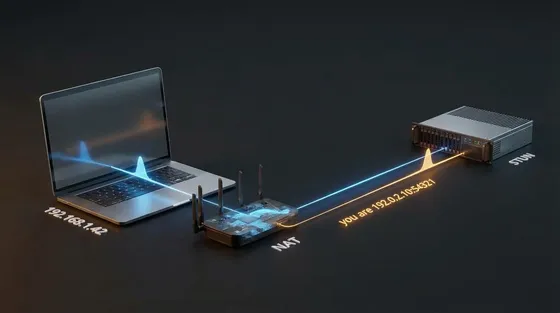
Alice's laptop doesn't know the address the internet sees it at, and the assistant can't reply to an address it was never told. How one STUN round trip finds it, why some networks need a TURN relay, and how ICE checks every path and picks one.
How a voice call actually works, one layer at a time.
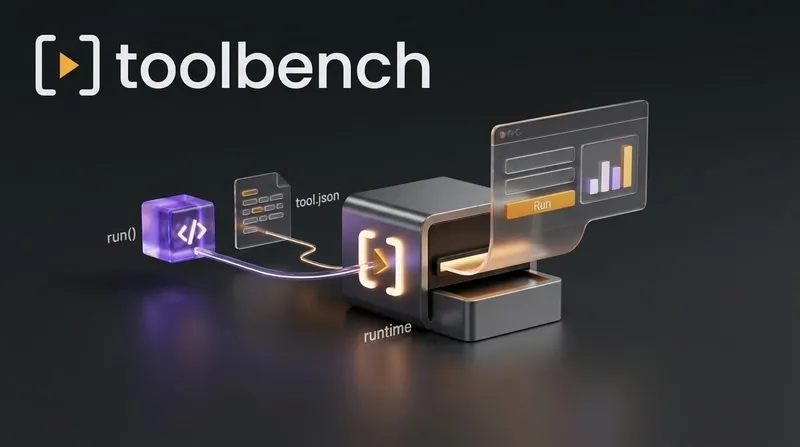
Toolbench is a small framework for interactive tools in web pages. A tool is a pure function and a JSON manifest, and the runtime builds the form, runs the function and draws the answer. What it is, how it fits together, and the choices behind it, shown with tools that run live on mainLog.

The internals of toolbench, the framework behind mainLog's tools: what the runner guards against, why a worker exists only to be terminated, how a graph is laid out and routed the same in every browser, how known answers and size budgets keep tools honest, and why every migration is the identity function.
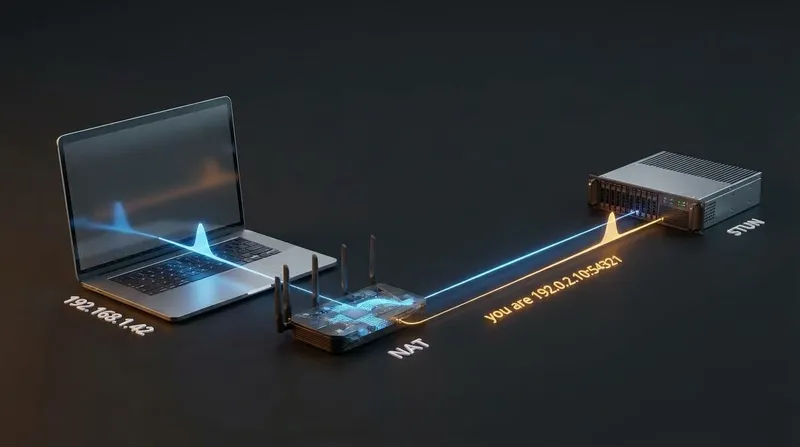
Alice's laptop doesn't know the address the internet sees it at, and the assistant can't reply to an address it was never told. How one STUN round trip finds it, why some networks need a TURN relay, and how ICE checks every path and picks one.
How a voice call actually works, one layer at a time.

