Real-time voice, from the packet up

How a voice call actually works, one layer at a time, from a single packet to a group call. If you build on WebRTC or voice AI, these are the protocols underneath the API, and the reasons they behave the way they do.

6 posts · 2026
Subscribe
01
Start here

What's inside one voice packet

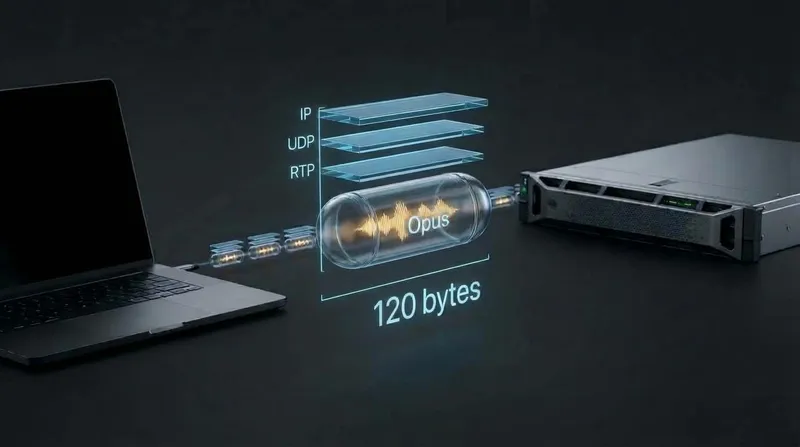
Twenty milliseconds of speech becomes an 80-byte Opus frame inside a 120-byte packet. Why each header is there, and why one lost packet costs 20 ms over UDP and 80 or more over TCP.

audionetworkingwebrtc
  1. 02
    Networking & media

    Late is lost

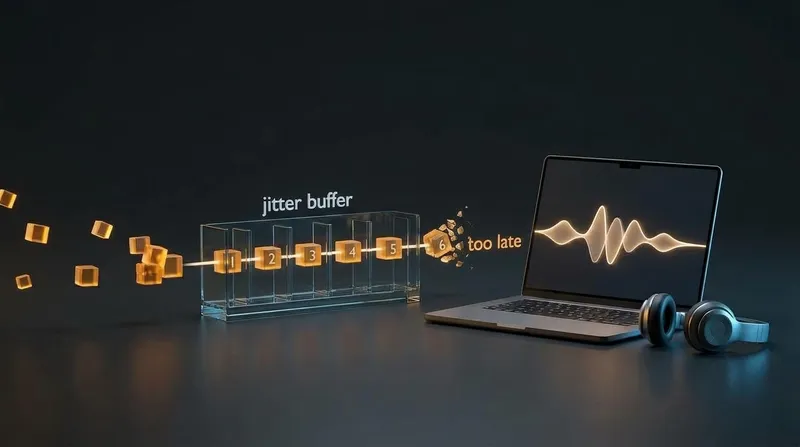
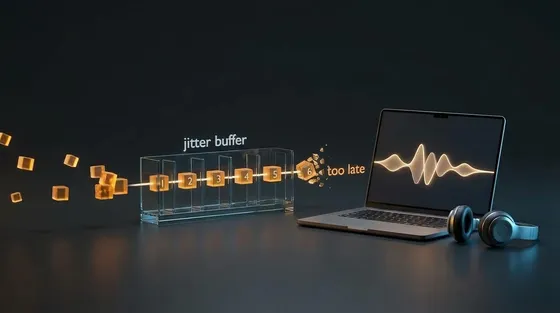
    Packets arrive unevenly, and a packet that misses its slot is as good as lost. How a jitter buffer trades delay for dropouts, what concealment can and can't hide, and what Opus FEC and RED buy against random loss and against bursts.

    audionetworking
    Sep 2026
  2. 03
    Networking & media

    How two computers find a path

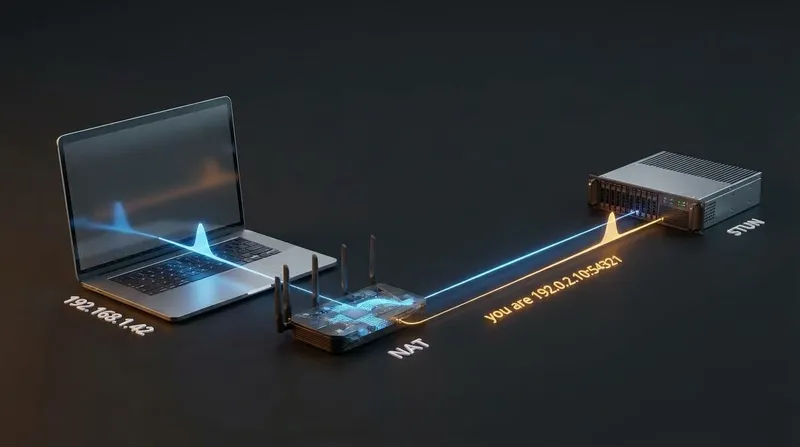
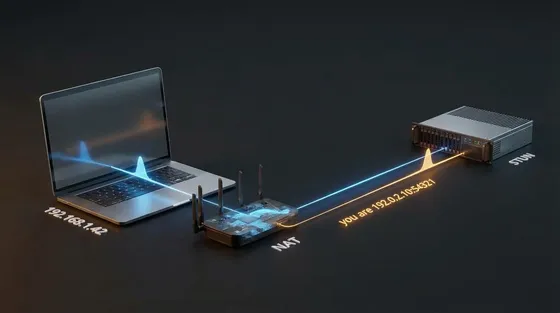
    Alice's laptop doesn't know the address the internet sees it at, and the assistant can't reply to an address it was never told. How one STUN round trip finds it, why some networks need a TURN relay, and how ICE checks every path and picks one.

    networkingwebrtc
    Sep 2026
  3. 04
    Networking & media

    Keys, then audio

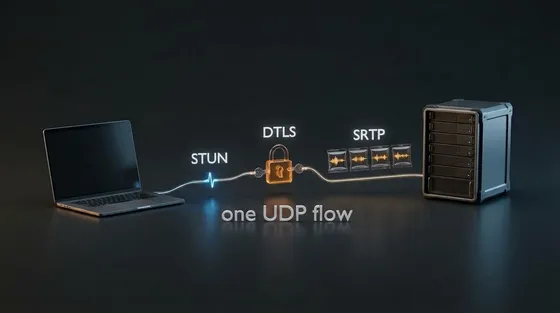
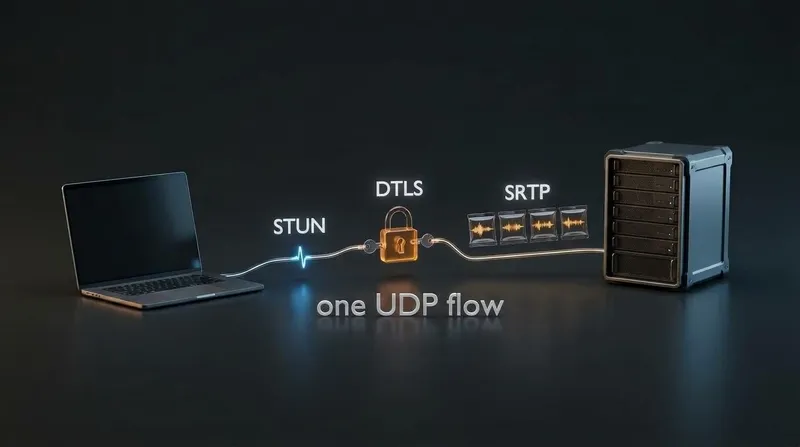
    The path is found, and every router on it could hand Alice's voice to a decoder. How two machines that have never met agree on keys over a network anyone can read, what SRTP does to her packet and what it deliberately leaves alone, and how long a call takes from cold start, measured.

    networkingwebrtc
    Sep 2026
  4. 05
    Networking & media

    The receiver talks back

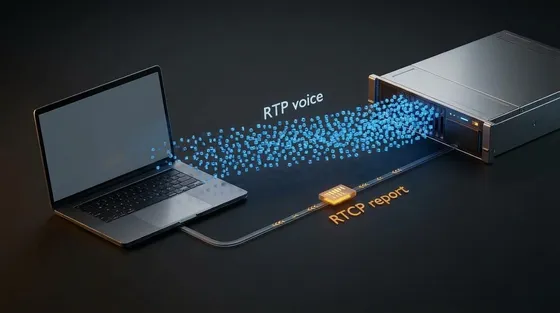
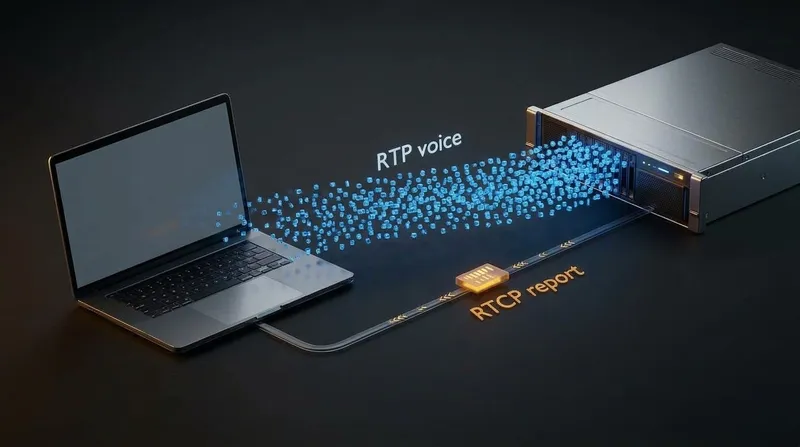
    Alice's laptop sends fifty packets a second into a network that never answers. A few dozen bytes from the receiver every few seconds carry the loss, the jitter and enough timestamps to measure the round trip without synchronised clocks. Enough to back off, but not fast enough to back off well, which is why browsers add feedback for every packet.

    networkingwebrtc
    Oct 2026
  5. 06
    Networking & media

    Where the server sits

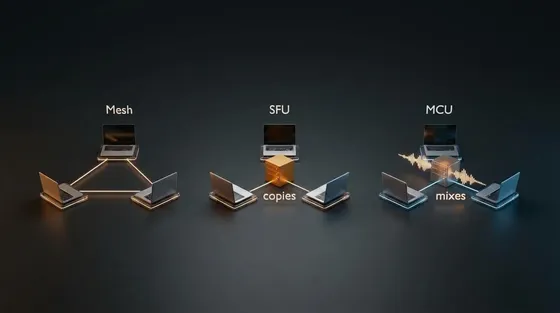
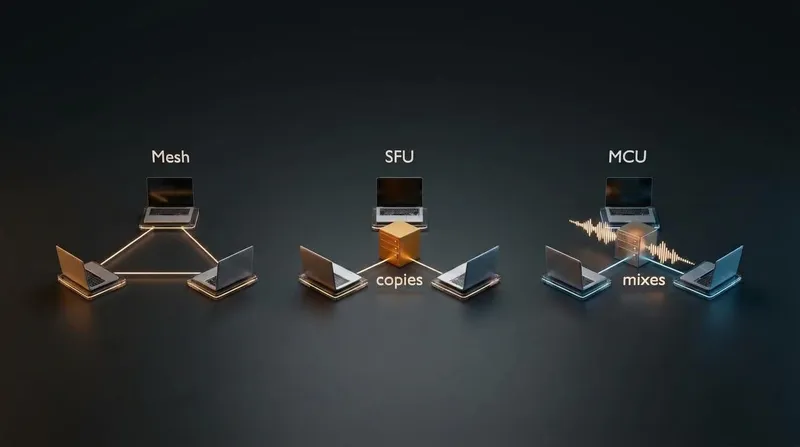
    Add Bob and Carol to Alice's call and someone has to copy her voice twice. Mesh, an SFU and an MCU put that copy in three different places, and the cost moves with it: upload, server bandwidth, or a decode and an encode per person. Then back to Alice's assistant, where the server is simply the other end of the call.

    webrtcarchitecture
    Oct 2026
  1. 02
    Sep 17, 2026 22 min read Networking & media

    Late is lost

    Packets arrive unevenly, and a packet that misses its slot is as good as lost. How a jitter buffer trades delay for dropouts, what concealment can and can't hide, and what Opus FEC and RED buy against random loss and against bursts.

    audionetworkingwebrtc
  2. 03
    Sep 23, 2026 23 min read Networking & media

    How two computers find a path

    Alice's laptop doesn't know the address the internet sees it at, and the assistant can't reply to an address it was never told. How one STUN round trip finds it, why some networks need a TURN relay, and how ICE checks every path and picks one.

    networkingwebrtc
  3. 04
    Sep 28, 2026 25 min read Networking & media

    Keys, then audio

    The path is found, and every router on it could hand Alice's voice to a decoder. How two machines that have never met agree on keys over a network anyone can read, what SRTP does to her packet and what it deliberately leaves alone, and how long a call takes from cold start, measured.

    networkingwebrtc
  4. 05
    Oct 5, 2026 21 min read Networking & media

    The receiver talks back

    Alice's laptop sends fifty packets a second into a network that never answers. A few dozen bytes from the receiver every few seconds carry the loss, the jitter and enough timestamps to measure the round trip without synchronised clocks. Enough to back off, but not fast enough to back off well, which is why browsers add feedback for every packet.

    networkingwebrtc
  5. 06
    Oct 15, 2026 27 min read Networking & media

    Where the server sits

    Add Bob and Carol to Alice's call and someone has to copy her voice twice. Mesh, an SFU and an MCU put that copy in three different places, and the cost moves with it: upload, server bandwidth, or a decode and an encode per person. Then back to Alice's assistant, where the server is simply the other end of the call.

    webrtcarchitecturenetworking